


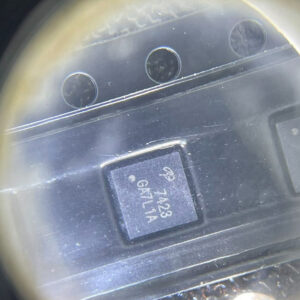
Product Overview
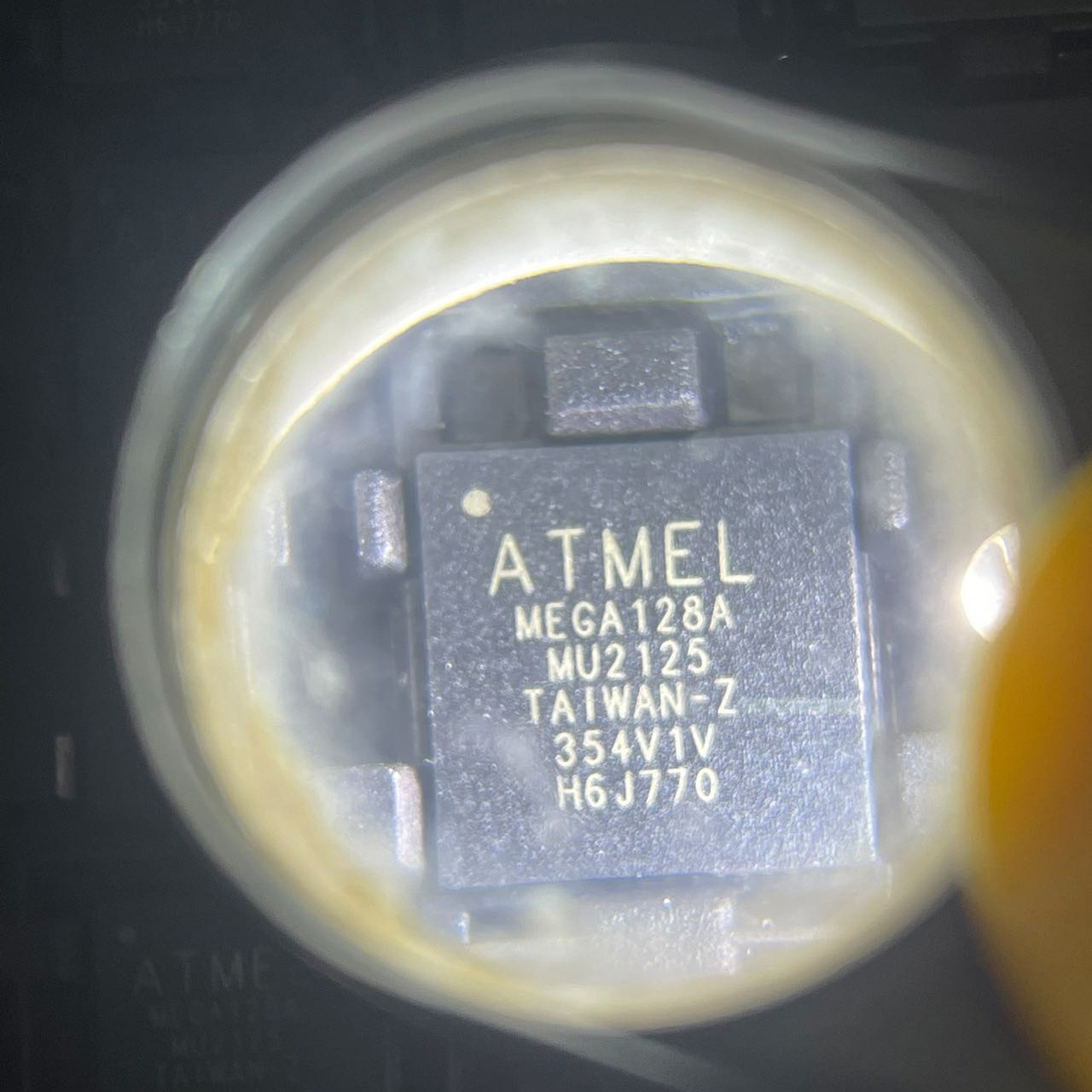
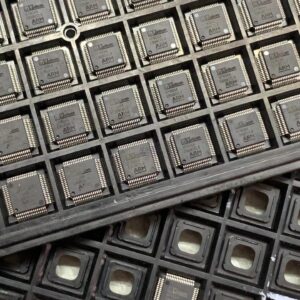
The ATMEGA128A-MU is a high-performance, low-power CMOS 8-bit microcontroller from Atmel (now Microchip) based on the AVR enhanced RISC architecture. Featuring 128KB of in-system self-programmable Flash memory, 4KB of EEPROM, and 4KB of internal SRAM, the ATmega128A is the enhanced ‘A’ version of the classic ATmega128, offering improved electrical characteristics and wider voltage range. The device achieves a throughput of up to 16 MIPS at 16 MHz by executing powerful instructions in a single clock cycle. It provides 53 general purpose I/O lines, four flexible timer/counters with compare modes and PWM, two USARTs, a byte-oriented Two-Wire serial interface (I2C compatible), an 8-channel 10-bit A/D converter with differential input stage and programmable gain, a programmable watchdog timer, an SPI serial port, and an IEEE 1149.1 compliant JTAG test interface for on-chip debugging and programming. The ATmega128A also features six software-selectable sleep modes for power optimization. With a 2.7V to 5.5V operating voltage range and 0-16MHz speed grade, the ATmega128A is a versatile MCU suitable for a wide range of embedded applications. The -MU suffix indicates the MLF/QFN-64 surface-mount package with exposed pad (9x9mm body, 5.40mm exposed pad). This compact package provides excellent thermal performance while significantly reducing board space compared to TQFP alternatives.
Key Specifications
| Parameter | Conditions | Min | Typ | Max | Unit |
| Core Architecture | 8-bit AVR RISC | ||||
| Max Clock Frequency | ATmega128A | 0 | 16 | MHz | |
| Throughput | @ 16MHz | 16 | MIPS | ||
| Total Instructions | 133 instructions (most single-cycle) | ||||
| Working Registers | 32 x 8-bit general purpose | ||||
| Multiplier | 2-cycle, 8×8 → 16-bit | On-chip | |||
| Flash Program Memory | In-System Self-programmable | 128 KB | |||
| Flash Endurance | Write/Erase cycles | 10000 | cycles | ||
| Flash Data Retention | 85°C / 25°C | 20/100 | years | ||
| Boot Code Section | Independent lock bits | Yes (optional) | |||
| Read-While-Write | Yes (true RWW) | ||||
| External Memory Space | Optional | Up to 64KB | |||
| Internal SRAM | 4 KB (4096 bytes) | ||||
| EEPROM | Data memory | 4 KB (4096 bytes) | |||
| EEPROM Endurance | 100000 | cycles | |||
| I/O Pins | 53 programmable I/O lines | ||||
| I/O Ports | Ports A, B, C, D, E, F, G | ||||
| 8-bit Timer/Counter 0 | With prescaler & compare | 1 (T/C0) | |||
| 8-bit Timer/Counter 2 | Async capable | 1 (T/C2) | |||
| 16-bit Timer/Counter 1 | 3 compare + 1 capture | 1 (T/C1, 16-bit) | |||
| 16-bit Timer/Counter 3 | 3 compare + 1 capture | 1 (T/C3, 16-bit) | |||
| Total Timers | 4 timer/counters | ||||
| PWM Channels | Programmable resolution 2-16 bit | 6 channels | |||
| 8-bit PWM Channels | 2 channels | ||||
| USARTs | Full duplex, programmable | 2 USARTs (USART0, USART1) | |||
| SPI Interface | Master/Slave | 1 SPI | |||
| Two-Wire Interface | Byte-oriented, I2C compatible | 1 TWI | |||
| ADC Resolution | 10-bit | ||||
| ADC Channels | Single-ended | 8 channels | |||
| ADC Differential Channels | 7 differential channels | ||||
| ADC Gain Options | Differential inputs | 1x, 10x, 200x | |||
| Analog Comparator | 1 (on-chip) | ||||
| Real Time Counter | Separate oscillator | Yes (RTC) | |||
| Watchdog Timer | On-chip oscillator | Programmable WDT | |||
| JTAG Interface | IEEE 1149.1 compliant | Yes (boundary scan + debug + prog) | |||
| External Interrupts | 8 external interrupt pins | ||||
| Interrupt Levels | 4-level priority | ||||
| Power-On Reset | Yes (POR) | ||||
| Brown-out Detection | Programmable | Yes (BOD) | |||
| Internal RC Oscillator | Calibrated | Yes | |||
| ATmega103 Compatibility Mode | Selected by fuse | Yes | |||
| QTouch Support | Capacitive touch | Yes (up to 64 sense channels) | |||
| Operating Voltage | ATmega128A | 2.7 | 5.5 | V | |
| Sleep Modes | 6 modes | ||||
| Operating Temperature | Industrial | -40 | +85 | °C | |
| Package | 64-pad QFN/MLF (9x9x1.0mm, 5.4mm EP) | ||||
Features
- High-performance, low-power AVR 8-bit RISC microcontroller
- 133 powerful instructions — most single clock cycle execution
- 32 x 8 general purpose working registers
- Fully static operation: 0 to 16 MHz
- Up to 16 MIPS throughput at 16 MHz
- On-chip 2-cycle hardware multiplier (8×8 → 16-bit)
- 128KB in-system self-programmable Flash memory
- 10,000 Flash write/erase cycles, 20-year data retention
- 4KB EEPROM (100,000 write cycles)
- 4KB internal SRAM
- Optional Boot Code section with independent lock bits
- True Read-While-Write operation
- Up to 64KB optional external memory space
- Programming lock for software security
- JTAG (IEEE std. 1149.1 compliant) interface
- Boundary-scan capabilities
- Extensive on-chip debug support
- Programming of Flash, EEPROM, fuses, lock bits via JTAG
- 53 programmable I/O lines
- Two 8-bit Timer/Counters with separate prescalers
- Two 16-bit Timer/Counters with compare & capture
- Real Time Counter with separate oscillator
- Two 8-bit PWM channels
- 6 PWM channels with programmable resolution (2-16 bits)
- Output Compare Modulator
- 8-channel 10-bit ADC
- 7 differential ADC channels with 1x/10x/200x gain
- Byte-oriented Two-wire Serial Interface (I2C compatible)
- Dual programmable serial USARTs
- Master/Slave SPI serial interface
- Programmable Watchdog Timer with on-chip oscillator
- On-chip analog comparator
- Power-on Reset and programmable Brown-out Detection
- Internal calibrated RC oscillator
- External and internal interrupt sources
- Six sleep modes: Idle, ADC Noise Reduction, Power-save, Power-down, Standby, Extended Standby
- Software selectable clock frequency
- ATmega103 compatibility mode
- Global pull-up disable
- QTouch library support for capacitive touch
- Wide operating voltage: 2.7V – 5.5V
- Industrial temperature range (-40°C to +85°C)
- 64-pad QFN/MLF package (9x9mm) with exposed pad
Applications
- Industrial control systems
- Motor control and drives
- Consumer electronics
- Home automation
- Security systems
- Data loggers and data acquisition
- Medical devices
- White goods and appliances
- Lighting control
- Communication systems
- Automotive systems
- Robotics
- Capacitive touch interfaces